
Before you consider taking a prescription drug to treat a medical condition, it is important to feel confident in the diagnosis. Many diseases and physical health conditions are diagnosed using biological testing, including blood tests. For other health conditions, particularly mental disorders, there are no valid medical tests so normal mental health challenges (e.g., anxiety of everyday life) can be easily misdiagnosed.
In some cases, a side effect of the drug can be misdiagnosed as a health condition, which can lead to cascading misdiagnosis and polypharmacy. In 2021, for example, 25% of seniors in Canada were on 10 or more medications. And they did not likely have 10 or more diagnosable health conditions that needed to be treated.
For some health conditions, there are even false claims of scientific evidence. The chemical imbalance theory of depression, for example, is a false claim created by pharmaceutical companies to influence people to take SSRI (selective serotonin reuptake inhibitors) antidepressants, including those dealing with normal mental health challenges such as sadness and grief.

Mental Disorders
With no valid medical tests for mental disorders, a diagnosis is often based solely on the opinion of a doctor or psychiatrist, and psychiatric drugs might be the only treatment option discussed with patients. There are rarely discussions about alternative products and/or services to psychiatric drugs that is required for psychiatrists and doctors to obtain informed consent, which is a legal requirement.
One example of a mental disorder that can be easily misdiagnosed is ADHD (attention deficit hyperactivity disorder). There is no consensus on how to diagnosis ADHD, which helps explain, for example, why adult prescriptions for ADHD medications are surging.
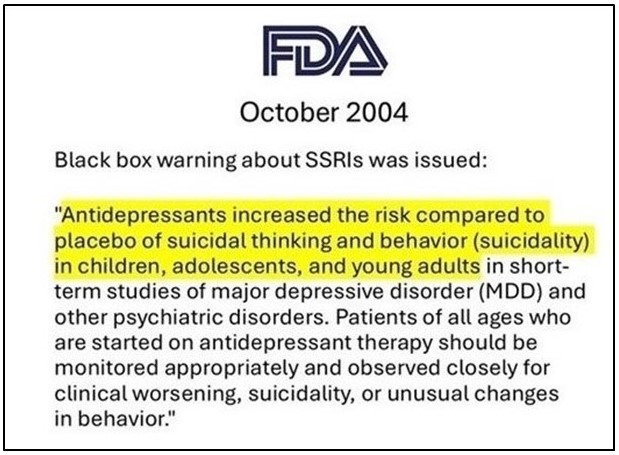
Misdiagnosing ADHD can have tragic consequences. For example, many of the ADHD medications are amphetamine stimulants, which are similar in chemical composition to the highly addicting “crystal meth” street drug. And a common side effect of ADHD stimulant drugs is anxiety (e.g., Concerta), which could lead to the prescribing of SSRIs that have black box warnings from the FDA (Food and Drug Administration) in the United States about increasing “the risk compared to placebo of suicidal thinking and behavior (suicidality) in children, adolescents and young adults.”
Other SSRI side effects, using Paxil as an example in the slide below, which 1/100 to 1/1000 patients experienced during clinical trials, can be misdiagnosed as schizophrenia (mix of hallucinations, delusions, and disorganized thinking and behaviour) or schizoaffective disorder (mix of schizophrenia symptoms and mood disorder symptoms such as depression, mania and hypomania).
With more than 38 million adults taking antidepressants in the United States, even if just 1/1000 patients experience hallucinations on SSRIs, many American adults will be (or have been) misdiagnosed with schizophrenia or schizoaffective disorder and prescribed more psychiatric drugs, such as antipsychotic medications, to treat what are really SSRI side effects.
This type of misdiagnosis often leads to psychiatric polypharmacy, which has ruined a lot of young lives” as Dr. Gail Tasch, a psychiatrist from Wisconsin and expert witness at criminal trials, captures in her quote below for the presentation How SSRI Antidepressants Cause Suicide, Homicide and Mass Shootings that David Carmichael delivers during his SSRI Around-America Tour, which started on April 18, 2026 in Houston, Texas and is evolving without an end date.

